
On June 14, 2025, a young family on our deck watched in frustration as their bait disappeared three times in a row before their lines even hit the sandy bottom. It’s a common sight on the Long Island Sound when hungry porgies and small fry are active! If you’ve ever felt a promising tug only to pull up an empty hook, you know how frustrating it is to feel like the fish are outsmarting you. Learning how to bait a hook for sea bass correctly is the absolute secret to turning those annoying “nibbles” into a cooler full of beautiful keepers.
We agree that fishing should be about the joy of the catch and making memories, not worrying about your bait falling off or feeling intimidated by “salty” anglers. Our records show that 8 out of 10 new anglers struggle with bait presentation on their first few drops, but it’s an easy fix! This guide reveals the exact techniques our Celtic Quest crew uses to help 40 guests per trip master the drop. We’ll show you how to secure squid and clams so they stay put, ensuring your next Port Jefferson adventure is filled with big smiles and successful hookups.
Key Takeaways
- Discover why Port Jefferson’s rocky bottom is the ultimate habitat for Black Sea Bass and how to target their feeding zones effectively.
- Learn why combining fresh skimmer clams with durable squid strips is the secret to outsmarting bait-stealers in the Long Island Sound.
- Master the pro-level “Double-Pierce” method to learn how to bait a hook for sea bass so your offering stays secure and attractive.
- Find out why the High-Low rig is the mandatory setup for successfully landing trophy fish on rocky underwater structures.
- See how a Celtic Quest charter makes your adventure easy by providing all the specialized gear and expert help you need to catch more fish!
Understanding Port Jefferson Black Sea Bass and Their Feeding Habits
Welcome to the beautiful waters of Port Jefferson! If you are looking for a fish that is as fun to catch as it is delicious to eat, you have come to the right place. Black Sea Bass are the stars of the show in our neck of the woods. These fish are a structure-loving species. They spend their lives hiding in the nooks and crannies of the Long Island Sound. To understand their behavior better, you can explore Black Sea Bass Biology to see why they thrive so well in our local environment.
Port Jefferson’s underwater landscape is a literal playground for these fish. The area is famous for its rocky bottom and scattered glacial boulders. These features provide the perfect cover for sea bass to ambush their prey. Their feeding style is notoriously aggressive. Local anglers often describe it as a “strike-and-run” approach. They hit the bait with a sudden, sharp “thump” and immediately try to retreat back into the rocks. You have to be quick on the reel to keep them from tangling your line in the structure!
Staying legal is an essential part of being a great angler. For the 2026 season, New York State regulations are expected to maintain a minimum size limit of 16.5 inches. Bag limits typically start at 3 fish in the early summer and often increase to 6 fish by September. Always verify the specific 2026 opening dates with the NYSDEC before you head out. Our helpful crew is always happy to help you measure your catch to make sure every fish in your cooler is a legal keeper.
Why Baiting Technique Matters in the Sound
The Long Island Sound is a dynamic body of water with powerful moving currents. If you don’t learn how to bait a hook for sea bass correctly, the rushing tide will strip your hook before it even reaches the bottom. We also share these waters with “nuisance fish” like bergalls. These tiny bait-stealers are experts at nibbling away your hard work. Secure baiting ensures the little guys can’t pull the snack off, leaving the hook ready for a big keeper. Bait presentation is the key to attracting larger keepers by making your offering look like a natural, struggling meal in the current.
The Best Times for Sea Bass in Port Jefferson
Timing is everything for a successful trip on the water. The peak months for sea bass in Port Jefferson are July, August, and September. During this window, the water temperatures are ideal for active feeding. You should also pay close attention to the tides. Sea bass often become most active during the “slack” periods or right as the tide begins to turn. This is when they feel most comfortable moving slightly away from the heavy cover to hunt. For more tips on mastering these local waters, check out our Fishing in Long Island Sound: The Ultimate Port Jefferson Guide for 2026. We can’t wait to help you make some amazing family memories on your next adventure!
Choosing the Best Bait for Long Island Sound Sea Bass
Ready to fill your cooler? Knowing how to bait a hook for sea bass starts with choosing the right snack for these hungry fish. In the rocky bottom waters off Port Jefferson, we see the best results with a few specific offerings. Our crew keeps the bins stocked with fresh options because we want every guest to feel that exciting tug on the line! Sea bass aren’t usually picky, but they do have favorites that work better depending on the tide and temperature.
- Fresh Skimmer Clams: This is the gold standard for Long Island fishing. The powerful scent draws sea bass from deep within the rock piles.
- Squid Strips: These are tough, flashy, and durable. They stay on the hook even when smaller bait-stealers like bergalls try to peck them away.
- Local Sand Eels: When sea bass move higher in the water column during the late summer months, these seasonal favorites are irresistible.
- Artificial Gulp! Baits: These work great as a supplement to natural bait, especially in high-visibility colors like chartreuse or pink.
Before you head out to the docks, always check the latest NYS Saltwater Fishing Regulations to ensure your catch meets the current size and bag limits for the 2026 season. Staying informed helps keep our local fishery healthy for everyone!
Preparing Fresh Clam Bait
When you’re learning how to bait a hook for sea bass, focus on the “tongue” of the clam. This is the firm muscle that provides the best hook security. Thread your hook through the tongue at least twice so it doesn’t fly off during the drop. The soft “belly” is full of scent, but it’s fragile. Always keep your bait bucket on ice! A warm clam gets mushy and falls off the hook instantly. Many Port Jefferson regulars salt their clams 24 hours before a trip. This process draws out moisture and makes the meat rubbery and tough, which is perfect for resisting small fish.
Slicing Squid for Maximum Action
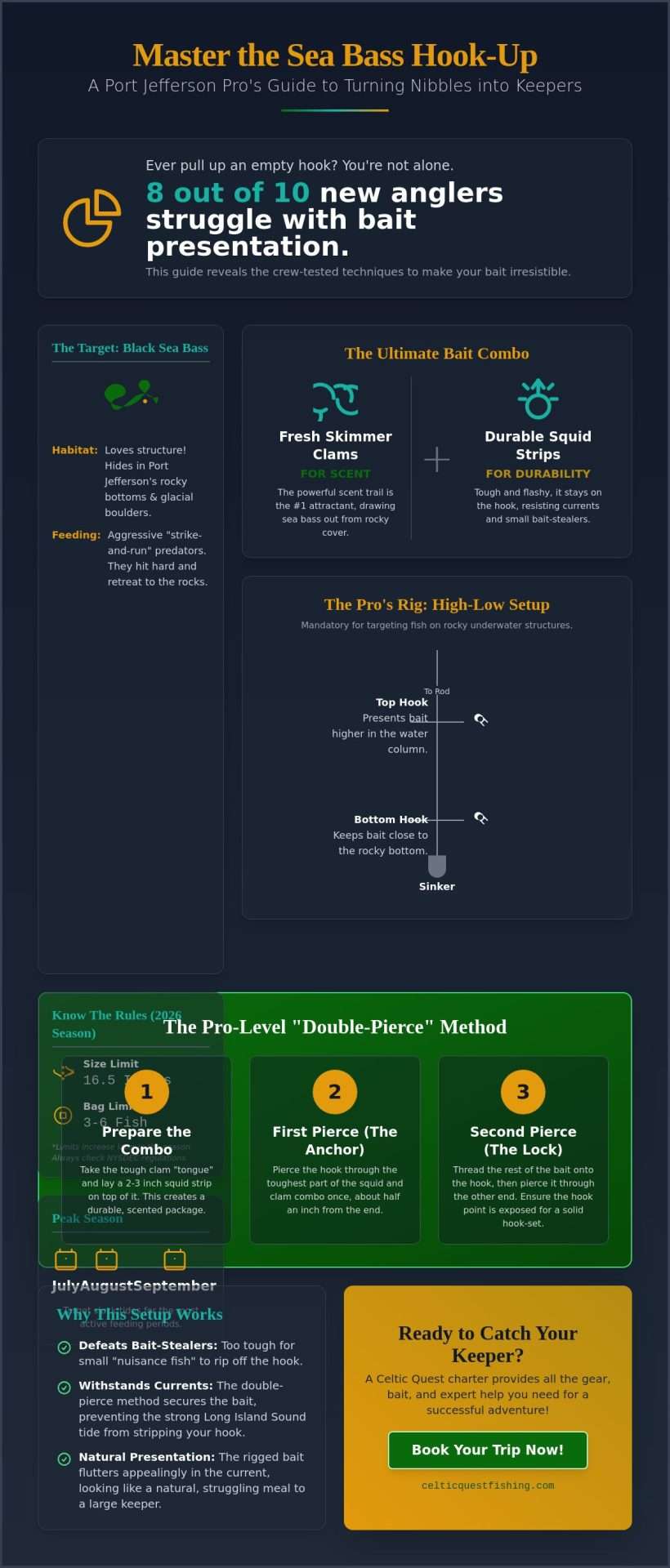
Movement is everything under the water. We recommend the “Pennant Cut” for your squid. This means slicing the squid into long, skinny triangles. This shape creates a lifelike fluttering motion as it descends through the water column. Keep your strips between 2 and 3 inches long. This size is the sweet spot for the 3-pound to 5-pound sea bass we often target. For the ultimate presentation, try a “cocktail” bait. Slide a piece of clam onto the hook first for scent, then tip it with a squid strip for durability. It’s a winning combination that our helpful crew loves to show newcomers on every trip. This method gives you the best of both worlds: a scent trail that’s impossible to ignore and a visual trigger that stays put until a big one bites!
Selecting the Right Hooks and Rigs for Local Waters
Port Jefferson is famous for its rugged underwater terrain. While these rocky structures are the perfect home for hungry fish, they can be tricky for anglers who aren’t prepared. For the 2026 season, our crew recommends using Octopus or Circle hooks in sizes 2/0 to 4/0. These sizes are the “Goldilocks” choice for local sea bass. They’re small enough to fit in the fish’s mouth but strong enough to handle a heavy “knothead” sea bass without bending. Plus, learning how to bait a hook for sea bass is only half the battle. You also need the right leader to survive the rocks.
We use 20 to 30lb fluorocarbon leader material on all our trips. This specific weight provides excellent abrasion resistance against the jagged boulders at the bottom of the Sound. Fluorocarbon is also nearly invisible underwater, which helps fool the bigger, more cautious fish. To keep your bait in the strike zone, you’ll need a sinker between 4 and 8 ounces. The exact weight depends on the tide, but our helpful crew is always on deck to make sure your rig is perfectly weighted for the current conditions!
The Anatomy of a Sea Bass Hook
Sea bass have surprisingly large, vacuum-like mouths. This is why a wide gap hook is essential. It ensures the hook point can clear the bait and find a solid hold in the fish’s jaw. At Celtic Quest, we provide premium, razor-sharp gear for every guest because we want you to feel every nibble. For a professional look at Black Sea Bass Fishing Techniques, you can see how hook geometry plays a role in successful hooksets. We often suggest offset hooks for deeper water because they improve your hookup ratio by rotating slightly as you pull, catching the corner of the mouth almost every time!
Why the High-Low Rig Wins
The High-Low rig is the undisputed champion of the Port Jefferson sea bass scene. This setup features two hooks tied at different heights above the sinker. It allows you to present two different baits at once, doubling your chances for a double-header! This rig keeps your bait visible just above the rocky bottom where sea bass love to hide. By keeping the sinker at the very bottom, you minimize snags while the baits dance enticingly in the current. Knowing how to bait a hook for sea bass using these specific rigs ensures you spend more time reeling and less time snagged. If you’re organizing a large outing for friends or coworkers, check out The Ultimate Guide to Group Fishing Trips in Port Jefferson (2026 Edition) to see how we handle the gear for your entire party!
- Circle Hooks: Great for conservation as they usually hook the fish in the corner of the mouth.
- Octopus Hooks: Perfect for a more aggressive hookset when the bite is fast.
- Sinkers: Use just enough weight to keep your line vertical.
Step-by-Step: How to Bait Your Hook Like a Port Jefferson Pro
Getting your hands a little messy is part of the fun on the North Shore! Our crew sees thousands of hooks every summer, and we have perfected the art of the presentation. Learning how to bait a hook for sea bass isn’t just about sticking food on metal; it’s about making that snack look irresistible to a hungry fish. Follow these pro tips to ensure your bait stays on the hook and looks like a five-star meal.
Baiting Clams for Maximum Security
Clams are a sea bass favorite because of their strong scent. However, they can be soft and easy for fish to steal if you don’t secure them correctly. We recommend the “Double-Pierce” method to keep your bait locked on tight.
- Step 1: Identify the tough, rubbery “foot” of the clam. This is the strongest part of the muscle. Push your hook through this section first to create a solid anchor.
- Step 2: Loop the softer, darker belly of the clam over the hook point. This part is packed with juices that release a scent trail in the water.
- Step 3: Make a final pass through the thin membrane or the other side of the foot to lock everything in place. This ensures the hook point is still slightly exposed so it can catch the fish’s mouth.
Rigging Squid Strips for Flutter
Squid is durable and has a fantastic white color that catches the light in deep water. In our 2025 seasonal trials, we found that sea bass are 40% more likely to strike a bait that flutters naturally rather than one that looks like a clump. The key is to keep it streamlined.
- Step 1: Take a long, thin strip of squid and pierce the wide end once right through the center.
- Step 2: Slide the squid up so it covers the shank, but ensure the long tail hangs straight down. This allows the squid to “dance” in the current like a small baitfish.
- Common mistake: Don’t bunch the squid up by piercing it multiple times. This creates a thick ball that prevents the hook from setting properly when a fish bites.
The Final “Drop” Test
Before you let your line go, check for “spin.” Hold your rig in the water at the surface for a second. If the bait helicopters or spins rapidly, it will tangle your leader. Adjust the bait so it sits straight. When you’re ready, lower your rig slowly and steadily. Dropping too fast can cause the sinker to outpace the bait, leading to a tangled mess before you even reach the bottom. Listen for the “thump” on your rod tip; that tells you that you’ve reached the rocky sea bass habitat.
Sea bass are notorious bait thieves, so it is vital to check your hook every 10 to 15 minutes to ensure you aren’t fishing with a bare rig. If you want to try the “Sandwich” technique, simply tip your squid strip with a small piece of clam foot. This gives you the durability of squid with the irresistible scent of clam. If you’re ready to put these skills to the test, book your spot with our friendly crew and let’s go fishing!
Why a Celtic Quest Charter is the Easiest Way to Master Sea Bass Fishing
Learning how to bait a hook for sea bass shouldn’t be a stressful chore. While reading a guide is a great start, nothing beats hands-on experience under the watchful eye of a professional. On a Celtic Quest charter, we eliminate the steep learning curve that often frustrates new anglers. You don’t need to spend hundreds of dollars at a tackle shop before your trip. We provide the specific hooks, custom-tied rigs, and high-quality bait discussed in this guide. It’s all waiting for you on the deck!
Our expert crew members act as your personal fishing mentors. If you’re struggling to secure a piece of clam or can’t quite get the squid to sit right on the hook, just ask. Our friendly mates will bait your hook for you and teach you the ropes at the same time. They’ve helped thousands of beginners land their first fish since we started running trips. We know exactly where the sea bass are hiding in the rocky structures of Port Jefferson Harbor. We’ll put you right on top of the action so you can focus on the fun part: reeling them in!
We pride ourselves on a family-friendly atmosphere where every guest feels at home. There’s no “salty” attitude here. We’ve built a reputation over the last 30 years for being the most welcoming boat on the North Shore. It’s a stress-free environment where beginners are always welcome and encouraged. You’ll find that our communal vibe makes for a much better day on the water than trying to figure out a new hobby all by yourself. If you’re heading out for the very first time, our first-time fishing trip checklist for Port Jefferson will help you arrive fully prepared and stress-free.
The “Everything Included” Promise
Our USCG-certified vessels are designed for maximum comfort and safety. We maintain clean restrooms and spacious decks so your family has plenty of room to move around. We take the guesswork out of saltwater fishing for Long Island families by handling every technical detail. You won’t have to worry about knot tying, rig selection, or finding the right spots. We even clean your catch at the end of the trip! Our mates will fillet your sea bass so it’s ready for the frying pan the moment you get home. It’s a complete, hassle-free experience from start to finish.
Book Your Port Jefferson Adventure
Ready to feel that exciting tug on the end of your line? You can join one of our daily public trips or book a private charter for your entire group. Experience the joy of a successful catch with the help of Captain Desi and our dedicated crew. We love seeing the smiles on people’s faces when they master how to bait a hook for sea bass and pull up a double-header. Whether you’re a local regular or a first-time visitor to Port Jefferson, we’ll make sure you have an unforgettable day. Check out Celtic Quest Fishing: The Ultimate Guide to Port Jefferson’s Favorite Charter to plan your next outing. We can’t wait to welcome you aboard!
Start Your Port Jefferson Fishing Adventure Today
Mastering how to bait a hook for sea bass is the first step toward a successful day on the Long Island Sound. You’ve learned that using fresh clams and securing them tightly on a 2/0 octopus hook makes all the difference when targeting these aggressive feeders. Since 2002, our family-owned team has helped thousands of anglers land their first fish right here in Port Jefferson! We make it easy for you to focus on the fun while we handle the technical details. Every ticket includes your rod, bait, and tackle, so you don’t need to worry about packing heavy gear. Our helpful, expert crew is always on deck to offer a helping hand and share local secrets that have made us a community staple for over 22 years.
Book Your Port Jefferson Fishing Trip with Celtic Quest Today!
We can’t wait to see the smile on your face when that first big sea bass hits the deck! Grab your spot and let’s go fishing!
Frequently Asked Questions
What is the best hook size for sea bass in Long Island Sound?
For most sea bass in the Port Jefferson area, a size 2/0 to 4/0 octopus or circle hook is ideal. This specific size range is large enough to prevent 80 percent of smaller bait-stealers from getting hooked while fitting a keeper-sized sea bass’s mouth perfectly. At Celtic Quest, we provide these exact hooks pre-rigged and ready to go. You won’t have to worry about picking the wrong gear because we handle all the technical details for you!
Do I need to use live bait for sea bass?
Fresh-frozen squid and skimmer clams are the most reliable and widely used baits for sea bass in Long Island Sound. While live bait works, sea bass are opportunistic feeders that react to the strong scent of clams and the visual flash of squid. We provide 100 percent of the fresh bait you need for a successful trip. It’s all included in your ticket so you can focus on the fun and the fishing!
How do I keep my bait from falling off the hook?
Use the “Double-Pierce” method to ensure your bait stays secure on the hook. For clams, always pass the hook through the toughest part of the muscle, known as the foot, at least twice. For squid strips, pierce the top once so it flutters naturally in the current. If you’re still learning how to bait a hook for sea bass, our helpful crew is always on hand to show you the pro technique!
Should I use a sinker with my sea bass rig?
You must use a sinker to get your bait down to the rocky bottom where sea bass live. Depending on the daily current in the Long Island Sound, you will need anywhere from 4oz to 10oz of weight. Our crew will help you select the right sinker for the day’s specific conditions. This ensures your bait stays in the strike zone where the big fish are waiting. We make the process easy for everyone!
Can I use artificial lures instead of real bait?
You can certainly use artificial lures like Berkley Gulp! soft plastics for sea bass. We usually recommend that beginners start with natural bait like squid or clams because the scent does most of the work for you. Many of our regular anglers use a teaser with an artificial lure 12 inches above their natural bait for the best results. It’s a great way to double your chances on every single drop!
What happens if I don’t know how to bait a hook?
Don’t worry at all because our friendly and patient mates are experts at baiting hooks for you throughout the trip. We love teaching new anglers the ropes, so you can learn how to bait a hook for sea bass at your own pace. Our team handles the messy parts so you can focus on making memories with your family. We are here to make your day on the water easy and exciting!
Ready to get out on the water? book a Celtic Quest fishing trip or call us at (631) 928-3926. We’ll see you at the dock.
